AI-native workspace for quality operations
Lower defect rates, close investigations faster, and continuously improve procedures, all without replacing any of your existing systems.
The investigation starts the moment the complaint does.
A customer complaint comes in. Vexum reads it, pulls out what matters (the part, the lot, what actually went wrong), and finds the procedure your team already wrote for this situation. Then begins the investigation.
Bracket 7741-2 won't seat, lot 44-A
Brackets from lot 44-A won't seat on the housing. Our line stopped twice this morning. Assembly gauged three at 24.06 and change, so the bore is tight.
240 in the lot, about 60 already on the floor. Inspection report attached. We need to know today whether the rest are good.
Our agents gather from all integrated systems.
Vexum connects to the systems your team already uses and can only read them, never change them. It pulls the measurement record, the drawing, the supplier history: the same digging your engineers do by hand today, finished before they even sit down.
Your engineers stay in charge.
When a step needs judgment, Vexum stops and hands it over, with everything gathered and every number traced back to where it came from. The engineer reads what was done, asks questions in plain words, and makes the call. Nothing gets past a decision without a person making it.
Your procedures get better over time.
Every investigation is written down as it happens: what ran, what was found, what the engineer decided. Over time that record shows how each procedure actually runs on the floor, and Vexum proposes changes to the procedure itself, which a person approves like everything else.
First-piece bore check after every tool change on the mill.
How it works
Start with the documents you have
Upload each procedure as it exists today: the SOP, the work instructions, the forms, the spec sheets. PDFs, scans, spreadsheets, photos of a binder page. If a workbook is the procedure, that works too.
Every step classified, every step cited
Vexum turns the documents into a structured procedure. Every step cites the exact file and place it came from, and every step is classified by who does it: Automated runs on its own. Assisted is prepared by the agent and approved by a person. Operator belongs to a person entirely. Drafted means the write-up is prepared for review.
Nothing runs until your team says so
A manager reviews the digitized procedure, changes any classification, and publishes it. Only published procedures run. From that point, every complaint and failed inspection that comes in runs against it, exactly as shown above.
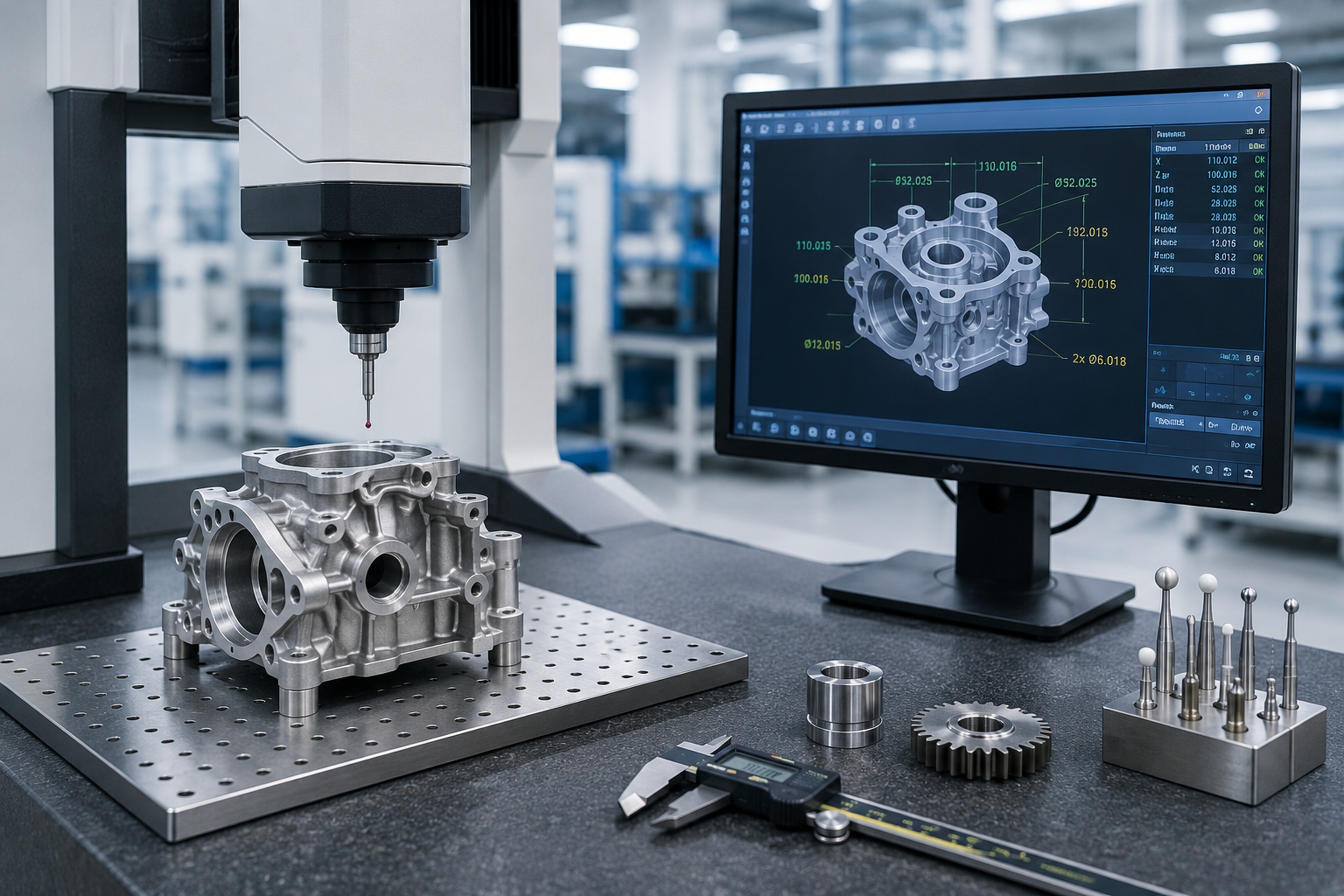
Built for procedures that branch, drift, and need proof.
Vexum is built for the work in the middle: too important to run from memory, too dependent on context for a static document, too judgment-heavy to fully automate.



Trust and safety architecture
Our agents are built for enterprise manufacturing deployment.
Guardrails in the architecture, grounding in your documents, traceability on every number, hash-chained records, export control enforced before anything is read, an audit trail built for review, and a person in the loop at every decision.
The step classification is the boundary
Every step is classified before it runs: Automated runs on its own, Assisted is prepared by the agent and approved by a person, Operator belongs to a person entirely. The agent cannot run a step above its class, and your team sets the class.
Every judgment needs a person
An Assisted or Operator step stops the investigation and waits. The agent prepares the decision and shows its reasoning; it cannot make the decision, and no classification exists that would let it.
Read-only to your systems of record
Your QMS, ERP, PLM, LIMS and inspection systems are pulled from and never written to, enforced in the transport layer. Vexum cannot change a record, place a hold, or close anything in them. Where you ask it to save a document to a folder you named or send a message a person approved, that happens through a connection you configured, and every one is on the record.
Missing records are flagged, never guessed
When a system is unreachable or a record does not exist, that is written into the investigation instead of filled with an assumption.
Every number names its source
Each value carries the document it came from, so anything on screen can be traced back and opened.
Full audit log
Every action, lookup and decision is written as it happens, in order, with who did it and when. The record is hash-chained, so anything altered after the fact shows.
Custom-built integrations to your existing systems
Every deployment includes integrations built for your environment: your QMS, PLM, ERP and inspection systems, in whatever form they take today. Vexum is read-only to your systems of record: your QMS, ERP, PLM, LIMS and inspection systems are pulled from and never written to, enforced in the transport layer, not by policy. Where you ask Vexum to save a document or send a message, it happens through a connection you configured, to a location you named, on a person's instruction, and every one is on the record. Your QMS remains the system of record, and completed records export back to it. Where records live in shared drives or exported files, those are integrated the same way.
Deployment and security
SOC 2 Type I in preparation. Designed against ISO/IEC 27001, with a Statement of Applicability maintained across all 93 Annex A controls. Built for IATF 16949 quality environments and for ITAR/EAR export-control requirements. CSA CAIQ and AI-CAIQ answer sets available on request.

Book a demo
Learn how Vexum:
- Lowers defect rates
- Speeds up investigations
- Standardizes procedures across shifts and sites
- Shows how procedures actually run, and improves them over time
- Gets root causes fixed
- Writes the audit record on its own